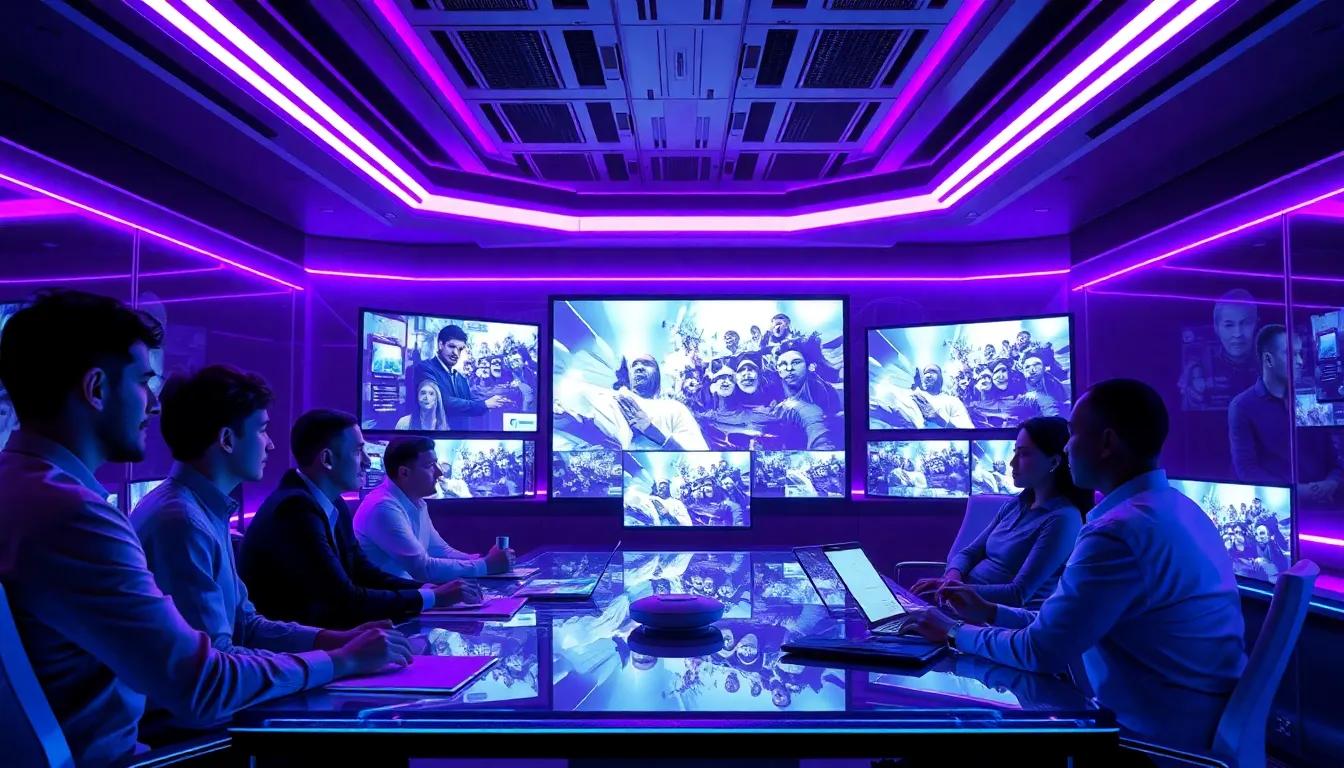
How We Evaluated AI Video Generators in 2026
AI video generation has matured dramatically since our 2025 guide. Native audio, multi-shot coherence, and physics-based rendering are now table stakes rather than differentiators. Our 2026 methodology evaluates eight dimensions: output realism, motion and physics accuracy, audio-visual synchronization, rendering speed, cost per finished second, prompt fidelity, API and workflow integration, and licensing terms. We tested every platform with identical briefs—brand commercials, product showcases, social content, and narrative shorts—using consistent scoring rubrics across 200+ renders.
The landscape shifted substantially. Kling 3.0 introduced scene-based multi-shot generation in February. Google shipped Veo 3.1 with improved temporal consistency. ByteDance launched Seedance 2.0 with native audio and physics simulation. Sora 2 Pro remains the cinematic benchmark but faces real competition for the first time. This guide reflects conditions as of February 2026.
2026 Rankings by Use Case
For cinematic storytelling and long-form narrative, Sora 2 Pro remains the leader. Its multi-shot coherence, HDR lighting, and character consistency across extended sequences are unmatched. However, Kling 3.0 has closed the gap significantly—delivering 85–90% of Sora's quality at roughly one-third the cost, with faster render times and native multi-shot support.
For high-velocity social content and marketing iteration, Minimax Hailuo and Seedance 2.0 lead the pack. Hailuo renders 10-second sequences in under two minutes. Seedance 2.0 adds native audio generation, eliminating the separate sound design step. For teams managing multiple models simultaneously, Mobbi provides the unified workflow layer—connect Sora, Kling, Veo, and Hailuo through one dashboard with consistent credit pricing and analytics.
- Sora 2 Pro → cinematic quality benchmark, best character consistency, HDR. Premium pricing.
- Kling 3.0 → best value for quality, scene-based multi-shot, native audio. Near-Sora results at 3x lower cost.
- Veo 3.1 → strongest prompt fidelity, excellent audio sync, Google ecosystem integration.
- Seedance 2.0 → native audio-visual generation, physics simulation, fast iteration.
- Minimax Hailuo → fastest renders, lowest cost per second, ideal for concept testing.
- Mobbi.ai → unified multi-model platform, workflow orchestration, analytics, GEO-ready.
Sora 2 Pro: Still the Quality Benchmark
OpenAI's Sora 2 Pro continues to produce the most photorealistic AI video available. Fabric draping, water dynamics, facial micro-expressions, and complex multi-character interactions remain best-in-class. The model handles 30-second continuous generations without quality degradation, and its understanding of cinematic language—rack focus, dolly movements, crane shots—creates footage that approaches professional production quality.
The limitations are real, though. Render times run 15–30 minutes for premium outputs. Enterprise pricing starts at $5,000/month plus usage. The API, while functional, lacks the webhook support and batch processing that production teams need. For teams with budget constraints or high-volume requirements, Sora 2 Pro is best reserved for hero assets while faster engines handle iteration.
Kling 3.0: The New Value Champion
Kling 3.0 is the biggest leap in the 2026 lineup. Kuaishou's scene-based multi-shot generation transforms AI video from clip-by-clip assembly into genuine storytelling. Describe three scenes in sequence—a character entering a room, sitting at a desk, opening a laptop—and Kling 3.0 maintains character identity, wardrobe, and environmental consistency across all shots. This feature alone saves hours of manual compositing.
Native audio synchronization lands well. Ambient sounds, footsteps, and environmental effects generate automatically and match the visual content. Physics simulation has improved dramatically—cloth, hair, and water behavior look natural rather than procedural. At roughly $0.03 per rendered second in bulk, Kling 3.0 delivers professional results at a price point accessible to independent creators and small teams.
Veo 3.1: Google's Precision Play
Google's Veo 3.1 stands out for prompt fidelity—it does what you ask, precisely. Complex compositional prompts with specific spatial relationships, lighting directions, and action sequences render accurately more often than any competing model. The audio integration, inherited from Veo 3, remains excellent, with dialogue-quality voice generation synchronized to character lip movements.
Veo 3.1 integrates natively with Google's ecosystem—Vertex AI, Cloud Storage, YouTube Studio. For organizations already invested in Google Cloud, this reduces integration friction. The model serves well for educational content, explainer videos, and presentation materials where accuracy matters more than artistic flair. Pricing sits between Kling and Sora, making it a solid mid-tier choice.
Seedance 2.0 and Hailuo: The Speed Tier
ByteDance's Seedance 2.0 brought a unique capability to market: truly native audio-visual generation. Rather than generating video and audio separately, Seedance produces them as a unified output. The result is remarkably natural sound design—rain sounds match visual rainfall intensity, footstep timing aligns with character movement, and ambient noise shifts with scene changes. The 12-file multi-reference input system gives creators fine-grained control over character appearance and scene composition.
Minimax Hailuo remains the speed king. Sub-two-minute render times for 10-second 1080p sequences make it indispensable for rapid concept testing. The quality sits below Sora and Kling but above the threshold for social media content. Marketing teams routinely generate 20–30 Hailuo variants before committing a polished prompt to Sora or Kling for final production. At approximately $0.01 per rendered second, Hailuo is the cheapest professional-grade option available.
2026 Pricing Comparison
Pricing structures have evolved since 2025. Sora 2 Pro enterprise plans start at $5,000/month with usage-based billing on top—expect $2–5 per 10-second render depending on resolution and complexity. Kling 3.0 offers pay-as-you-go at roughly $0.30 per 10-second 1080p render, with volume discounts dropping this to $0.15. Veo 3.1 charges through Vertex AI at approximately $0.50–1.00 per 10-second clip. Hailuo remains the budget option at $0.10–0.15 per render.
Mobbi.ai's Pro tier at $49/seat/month bundles credits across all connected engines, providing a unified billing layer. This eliminates the need to manage separate accounts and credit balances across providers. For teams using three or more engines—which our data suggests is now the norm for professional production—the platform approach reduces both cost and administrative overhead.
Choosing Your 2026 Stack
The optimal approach in 2026 is a tiered stack rather than a single platform commitment. Use Hailuo or Seedance for rapid concept validation—generate dozens of variants cheaply and quickly. Promote winning concepts to Kling 3.0 for production-quality renders with multi-shot coherence. Reserve Sora 2 Pro for flagship assets where every frame matters. Layer Mobbi.ai across all engines for workflow consistency, analytics, and GEO metadata management.
Before committing budget, run your actual briefs through at least three engines. AI video quality varies dramatically by content type—Sora excels at cinematic human drama, Kling handles product and commercial content superbly, and Veo delivers the most accurate prompt-to-output translation for technical content. Match engines to jobs, not brands to loyalty.
- Define your content types and map each to the engine that handles it best.
- Budget for iteration credits alongside production renders—testing is where the value compounds.
- Standardize metadata and naming conventions so renders remain findable and attributable across engines.
- Review model changelogs monthly—capabilities shift fast enough to change optimal assignments quarterly.
Final Thoughts
AI video generation in 2026 is no longer about finding the one best tool—it's about assembling the right stack. Sora 2 Pro sets the quality ceiling, Kling 3.0 delivers the best value, Seedance 2.0 solves the audio problem, and Hailuo provides the iteration speed that modern production demands. The teams producing the best work use multiple engines through unified platforms rather than committing to a single vendor.
Start with your production requirements, test across engines with real briefs, and build workflows that let you move between models fluidly. The technology is mature enough that the bottleneck is no longer AI capability—it's creative strategy and operational efficiency.
Work With Mobbi.ai
Try all the top 2026 AI video models in one place. Mobbi gives you access to Sora 2, Kling 3.0, Veo 3, Seedance 2.0, and Hailuo with unified credits and workflow tools. Start with free daily credits.
Explore Mobbi.ai Platform